If you are shopping for an estate in Santa Ynez, the views and acreage are only part of the story. In a rural market, the property’s operating systems often matter just as much as the house itself. When you understand septic, water, power, internet, and access before you buy, you can make a more confident decision and avoid surprises after closing. Let’s dive in.
Why Rural Infrastructure Matters
Santa Ynez sits within the Santa Ynez Valley’s unincorporated rural planning area, where parcel-level infrastructure is common and service can vary from one property to the next. That means you cannot assume two nearby estates have the same setup for sewer, water, internet, or road access. According to the county’s Community Area Plans, the region’s pastoral and agricultural setting is a defining part of how land is planned and served.
For you as a buyer, that changes the due diligence process. In many estate transactions, utility systems are not subdivision-wide or standardized. Instead, they may depend on a private well, onsite wastewater treatment system, private roads, or parcel-specific internet options.
Septic Systems on Santa Ynez Estates
Many rural properties in Santa Ynez rely on an onsite wastewater treatment system, often called an OWTS or septic system, because they are not connected to public sewer. The Central Coast Water Board confirms that new or replacement septic systems require permits through the local jurisdiction or the Water Board, and some repairs also need approval. You can review the current septic permitting framework through the Central Coast Water Board septic permits page.
That matters because a septic system is not just a background feature. Its age, condition, location, and permit history can all affect your future maintenance planning and costs.
What to Review for Septic
When you evaluate a Santa Ynez estate, ask for documentation tied to the system itself. Helpful records may include:
- Septic permits
- Pumping and maintenance records
- Repair history
- Site plans showing tank and leach field locations
- Any prior inspection reports
If work is needed after closing, permit fees can apply, and those fees vary based on system complexity. Some minor repairs may not require a Water Board permit, but others do, so it is smart to verify the scope before planning any changes.
Septic and Well Placement
Septic location also interacts with the water supply. The State Water Board’s private well guidance says septic systems should be located downhill from a private domestic well and at least 100 feet from any drinking-water source. The same guide highlights why separation distances matter for protecting water quality.
In Santa Barbara County, water-supply review rules also look at contamination sources within 200 feet of a well. In practical terms, that means well placement, septic layout, drainage, and nearby land uses should all be reviewed together rather than as separate items.
Wells and Water Supply
For many Santa Ynez estates, water service comes from a private well, shared well, mutual water source, or small system rather than a large public utility. County subdivision rules show how important this is: adequate water supply, sewage disposal, and access are core requirements for new development and lot creation. The county’s subdivision code also notes that acceptable water supply can include an approved onsite or offsite well, or a shared water system, subject to county requirements, which you can see in the county subdivision code.
If the property has a private well, ownership comes with responsibility. The State Water Board states that private domestic well water quality is not regulated by the state, so owners are responsible for ongoing maintenance and monitoring.
Annual Well Testing Matters
The State Water Board’s 2025 well owner guide recommends annual testing for:
- Total coliform bacteria
- Nitrate
- Electrical conductivity
The guide also recommends annual inspection of the well head, seal, and pad. Typical lab costs listed in the guide are about $30 to $70 for coliform, $25 to $60 for nitrate, and $10 to $40 for electrical conductivity, which makes water testing an ongoing operating expense rather than a one-time inspection item. You can review those recommendations in the private well owner guide.
Water Costs Go Beyond the Pump
Water costs on a rural estate may include more than maintenance. The Santa Ynez River Water Conservation District monitors groundwater, manages releases to replenish downstream aquifers, and levies charges on groundwater production within the district. That means your water picture may include both household upkeep and district-level charges, depending on the parcel and water source. More detail is available on the Santa Ynez River Water Conservation District website.
If a property depends on a small system or another provider arrangement, Santa Barbara County also maintains water provider and drought planning resources that can help you understand who serves the parcel.
Power Reliability and Backup Planning
Power service in Santa Barbara County falls within Southern California Edison’s service area. For rural properties, power reliability deserves special attention because SCE may use Public Safety Power Shutoffs in high fire-risk conditions during dangerous wind and dry vegetation events. According to SCE, notifications often begin 1 to 2 days ahead, with additional notices closer to shutoff and restoration.
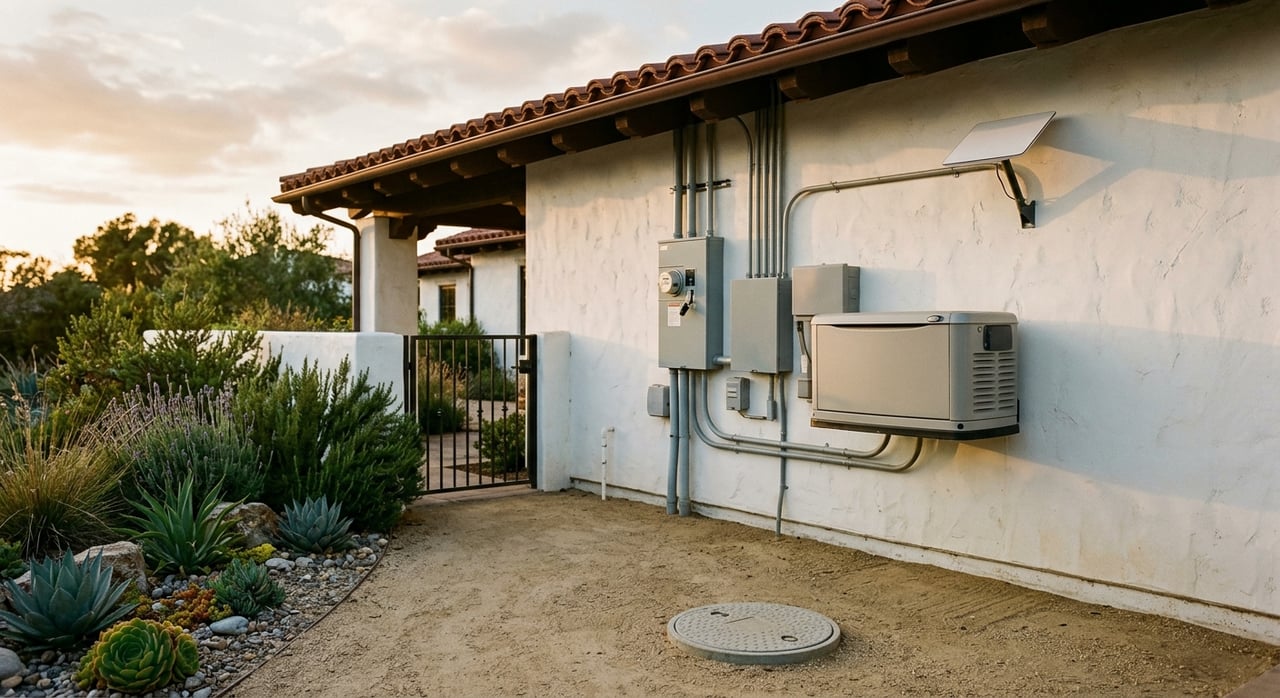
For you, the takeaway is simple: backup power is not just a convenience feature on a Santa Ynez estate. It may be part of the property’s day-to-day resilience plan, especially if gates, garage doors, pumps, or communications systems depend on electricity. You can confirm service-area information through Southern California Edison.
Questions to Ask About Power
Before you buy, consider asking:
- Is the property in an area with PSPS exposure?
- Is there backup generation or battery storage?
- Can gates and garage doors operate manually during an outage?
- Are critical systems, such as pumps or communications equipment, backed up?
Santa Barbara County’s Energy Assurance Plan notes that rooftop solar paired with batteries can help reduce grid-related outage impacts. On a rural estate, that makes power resilience part of the property infrastructure, not just an optional upgrade.
Internet and Communications Are Address-Specific
One of the biggest misconceptions in rural real estate is assuming internet service based on the town name alone. In Santa Ynez, broadband service remains uneven, and available technology can vary by parcel, road corridor, and terrain.
SBCAG’s 2025 update reports progress in rural broadband design and environmental review, including nearby Los Olivos and the West Highway 246 corridor, while broader county and state middle-mile work is being built toward Santa Ynez by the end of 2026. That is encouraging, but it still means current service should be verified at the exact property. You can review the update from SBCAG’s broadband announcement.
Verify Real-World Speeds
Broadband options may include buried fiber, aerial cable, or satellite, depending on the parcel. The CPUC has also highlighted the Santa Ynez Chumash Fiber Network, an underground high-capacity network that can provide up to 5 Gbps symmetrical service within Chumash Tribal Lands and benefit the surrounding population.
Even with improving infrastructure, the best practice is to verify address-level availability and test actual speeds whenever possible. For buyers who work from home, stream heavily, or rely on security systems, communications service should be treated as a core utility.
Road Access and Fire Safety
Access is another major part of rural due diligence. Santa Barbara County’s subdivision rules make clear that water, sewage, and access are all core infrastructure issues. The county code states that access must be provided by an existing private road meeting applicable fire-agency roadway standards, or through legal access to a public road or right-of-way easement, as outlined in the county subdivision code.
The same code also notes that road networks should support fire access and public evacuation. In some cases, requirements may include two routes of entrance and egress, visible road names and numbers, limits on cul-de-sac length, and other roadway standards, especially in areas of extreme fire hazard.
What to Confirm About Access
For a Santa Ynez estate, useful questions include:
- Is there recorded legal access?
- Who maintains the private road or driveway?
- Can emergency vehicles reach the home in all weather?
- Is the road width and grading consistent with applicable standards?
- Are road naming and address markers clear and visible?
If driveway or utility work affects county right-of-way, the county’s Public Works department may require encroachment permits. These details may sound technical, but they can influence daily use, future improvements, and emergency readiness.
Operating Costs to Expect
Rural estate ownership often includes recurring costs that are easy to overlook during the excitement of a purchase. Infrastructure systems may be private, but that does not make them one-time concerns.
Here are a few cost themes to keep in mind:
- Annual well testing and inspections
- Septic pumping, maintenance, or repair costs
- Permit fees if septic work is needed
- Groundwater-related district charges where applicable
- Backup power maintenance or upgrades
- Private road maintenance responsibilities
When you compare properties, this is where a parcel-level review becomes so valuable. Two estates with similar price points may have very different utility profiles and long-term ownership costs.
A Smart Due Diligence Checklist
If you are considering a rural estate in Santa Ynez, use this checklist to guide your review:
- Confirm whether the property uses public sewer, septic, private well, shared well, or another water system
- Request septic permits, pumping records, well logs, and recent water-quality results
- Review the location of the well, septic system, and other potential contamination sources
- Verify power provider, outage exposure, and backup power arrangements
- Check internet options at the exact address and test actual speeds if possible
- Confirm recorded access, easements, and road maintenance responsibility
- Review whether service trucks and emergency vehicles can reach the home reliably
In this market, infrastructure is part of the asset itself. Square footage and views matter, but the systems behind the property often shape how comfortably and confidently you can own it.
Santa Ynez estates can be extraordinary, but rural ownership works best when you know exactly what supports the land and home. If you want discreet, parcel-level guidance as you evaluate estate property in the valley, Nina Stormo offers the local insight and concierge-level support that can make complex decisions much clearer.
FAQs
What kind of wastewater system do many Santa Ynez estates use?
- Many rural Santa Ynez properties use an onsite wastewater treatment system, or septic system, because they are not connected to public sewer.
What water source serves many rural estates in Santa Ynez?
- Many estates rely on a private well, shared well, mutual water arrangement, or small water system, so you should verify the exact source for each parcel.
What well testing should owners consider for a Santa Ynez property?
- The State Water Board recommends annual testing for total coliform bacteria, nitrate, and electrical conductivity, along with annual inspection of the well head, seal, and pad.
Why should buyers verify internet service at a Santa Ynez address?
- Broadband in rural Santa Ynez remains location-dependent, so service quality and available technology can vary significantly from one parcel to another.
What access issue should buyers review for a Santa Ynez estate?
- You should review recorded legal access, road maintenance responsibility, and whether emergency vehicles can reach the home in all weather.
Why does backup power matter for rural properties in Santa Ynez?
- Rural properties may be affected by Public Safety Power Shutoffs, so backup power can help keep gates, garage doors, pumps, and communications systems functioning during outages.