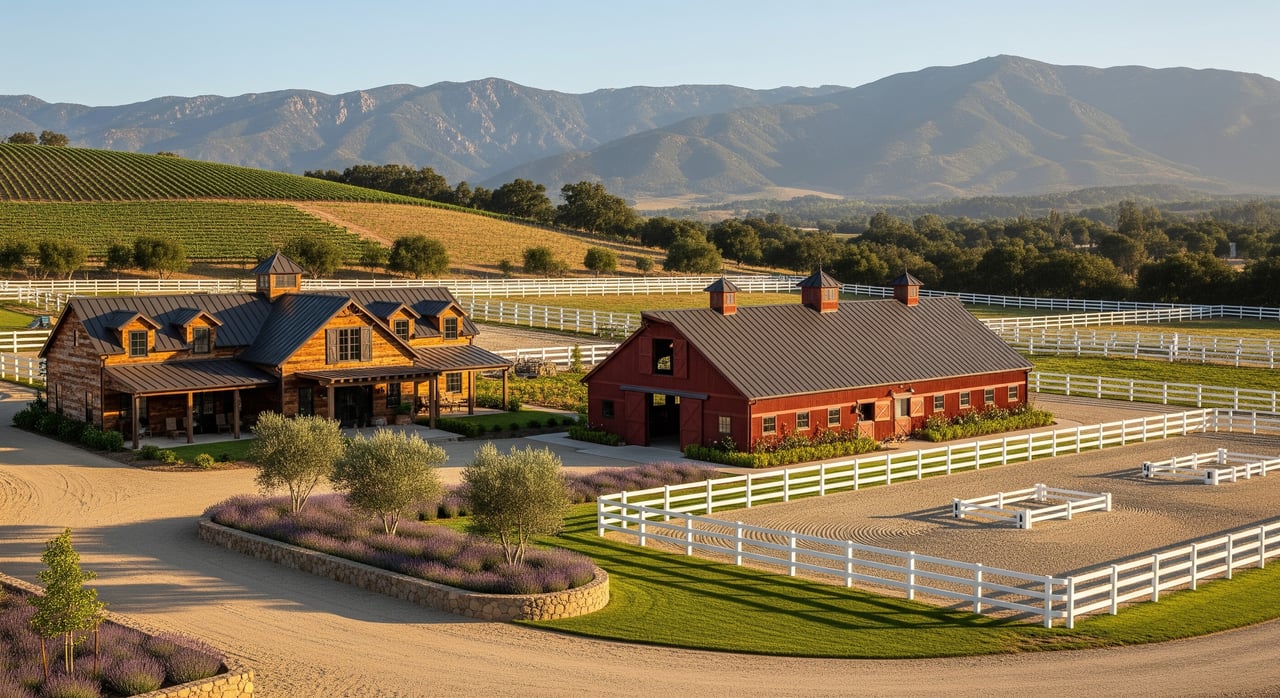
Thinking about selling your Solvang horse property? Equestrian buyers in the Santa Ynez Valley look beyond pretty barns to what truly works on the land. They care about usable acreage, water reliability, safe access, and facilities that make daily horse care simple and safe. In this guide, you’ll learn exactly what buyers expect, where to invest before listing, and how to present your property for confident offers. Let’s dive in.
Why Solvang buyers think differently
Solvang sits in a Mediterranean climate with cool, wet winters and warm, dry summers. Most rain falls in winter, which affects drainage, mud control, and pasture growth. Summers are dry and often windy, so dust management and water access matter.
Many parcels have rolling foothills rather than large, flat pads. Usable land, drainage, and access can weigh more than cosmetic barn upgrades. Buyers also factor in wildfire exposure, defensible space, and ember‑resistant features. Being close to local equine services and ride networks adds appeal.
Core features buyers check first
Equestrian buyers look for safe, functional layouts that minimize daily work and reduce risk. They also ask for documentation that supports long‑term use.
Site and usable acreage
Buyers focus on usable acres, not just total acres. Level or gently sloped ground that can be fenced and subdivided into paddocks is a major plus. Steeper terrain reduces practical turnout and increases maintenance.
Plan to show how the land works for horses. Many buyers expect about 0.5 to 1.0 acre per horse for routine turnout with supplemental feeding. Clear, safe circulation between barn, paddocks, and arena is a strong positive.
Barn and stall essentials
Stall sizing is a quick indicator of functionality. Many buyers look for 12 x 12 ft stalls as a baseline, with 12 x 14 ft favored for larger horses or long‑term housing. Safe aisle widths around 10 to 12 ft allow two‑way movement and equipment.
Ventilation, natural light, and secure storage matter. Expect questions about a separate tack room, a dry feed room, a wash rack with hot or tempered water, and space for equipment. Floors should drain well, and buyers will notice odors and standing water.
Utilities that support daily care
Water should be easy to access at the barn and paddocks, with documented well or municipal supply where applicable. Power for lighting, outlets, and hot water is expected. Backup plans for outages, such as generators or water storage tanks, are a plus.
Arena size, footing, and drainage
Functional arenas sell better than oversized but poorly maintained ones. Common multi‑use arenas run around 80 x 160 ft, while a standardized dressage court is about 66 x 197 ft. Good footing over a well‑draining base is more important than exotic materials.
Orientation and wind are real factors in the valley. North‑south orientation can reduce glare at sunrise and sunset. Windbreaks and grading that move water away from riding surfaces help year‑round usability.
Fencing and paddock design
Horse‑safe fencing counts. Buyers prefer smooth wood or vinyl rail, or rounded pipe. Barbed wire is a red flag. Typical fence height runs 48 to 60 inches for riding horses, and visibility of fence lines helps with safety.
Multiple paddocks enable rotational turnout and isolation when needed. Run‑in sheds should provide shade from summer sun and shelter from prevailing winds. Drainage and clean surfaces near gates matter in winter.
Trailer access and circulation
Safe, simple access can make or break a showing. Gates and driveways should accommodate horse trailers, with many sellers targeting at least 12 ft wide gates and often 14 ft for larger rigs. Pull‑through parking or a large turn‑around near the barn or arena reduces risk when loading and unloading.
Grades should be moderate and surfaces compacted. Buyers will test turning radii and staging areas during showings.
Pasture, hay, and water planning
Dry, ventilated hay storage for at least a few months is important to protect feed quality. Rotational grazing with water to each paddock shows thoughtful management.
Because drought cycles are common, buyers want to understand how you handle water during peak summer. They will ask about well yield, storage tanks, and any hauling plan.
Services and ride access
The Santa Ynez Valley has a robust equestrian community. Proximity to veterinarians, farriers, feed suppliers, and trainers is a selling point. Legal trail access or nearby rideable open space can increase interest. Document easements clearly if they exist.
Smart pre‑listing improvements
You do not need to rebuild the barn to win buyer confidence. Focus on practical fixes that improve safety, function, and first impressions.
High‑impact, lower‑cost upgrades
- Repair fencing and refresh paint or stain on rails.
- Widen or replace narrow gate openings to at least 12 ft, preferably 14 ft for larger trailers.
- Deep clean and declutter stalls, tack, and feed rooms; remove old feed and rodent attractants.
- Groom the arena, address low spots, and top‑dress footing as needed.
- Improve drainage around high‑traffic areas with simple swales or French drains.
- Create a tidy manure storage or compost area away from water sources and main living spaces.
- Clear vegetation along driveways and confirm a level trailer parking pad near the barn.
- Assemble a documentation binder with maps, permits, well logs, and maintenance records.
Moderate investments with good market response
- Replace barbed wire or failing fences with horse‑safe rail or mesh.
- Repair roofs, exterior walls, or rotted posts on barns and shelters.
- Add or improve run‑in sheds with thoughtful orientation to sun and wind.
- Install or upgrade water storage tanks for operational and emergency use.
Over‑improvements to avoid
- Building oversized competition or covered arenas that the local market may not justify.
- High‑end barn finishes that do not reduce daily management costs.
Showing day presentation
Presentation tells buyers how the property lives. Keep turnout areas trimmed, clear gates and aisles, and make paths obvious. If horses are on site, keep showings safe with clear separation between visitors and animals.
Create a one‑page spec sheet with stall sizes, arena dimensions and footing type, fencing materials, water sources, and a general list of local equine services. Share sample maintenance schedules and seasonal costs so buyers can plan with confidence.
Documentation buyers expect
Transparency reduces time on market. Before listing, gather the following:
- Zoning designation and allowable animals per parcel, plus any conditional use requirements for commercial equine activities.
- Building permits for barns, arenas, and major fencing or grading.
- Septic and well permits, well logs, pump capacity, and any water quality tests.
- Wildfire defensible space status and any recent fuel‑reduction work or ember‑resistant upgrades.
- FEMA flood zone status if near the Santa Ynez River, plus any erosion or drainage plans.
- Manure management plan or disposal arrangements.
- Insurance coverage details and any operating limitations for equine activities.
- Contact list for local veterinarians, farriers, feed and hay suppliers, trainers, and hauling services.
Buyer expectations and tradeoffs
Local buyers often prioritize usable land, safe fencing, and water reliability over luxury barn finishes. A smaller barn with great turnout can outperform a newer barn with poor drainage or access. A well‑maintained arena with sound footing beats a larger arena that puddles or rides unevenly.
Location relative to services and ride networks is a bonus. Firewise construction and clear defensible space around barns help buyers see lower risk and lower near‑term costs.
Red flags that slow offers
- Barbed wire, broken rails, or inadequate cross‑fencing.
- Poor drainage, muddy paddocks, or standing water near the barn.
- Unclear or missing well data, low yield, or frequent outages without backup plans.
- Narrow gates, steep drives, or difficult trailer turns.
- Unpermitted structures or significant unpermitted earthwork.
- Noise or nearby uses that conflict with equestrian activities.
Pricing and negotiation notes
Functional improvements that reduce a buyer’s immediate expenses tend to produce stronger offers. Fence replacement, water storage, basic drainage corrections, and legal trailer access are examples.
Be ready to share maintenance history, operating costs, and completed upgrades that show care for the land. Clear documentation supports pricing, shortens due diligence, and builds trust.
Ready to sell with confidence
If you tailor your property to how horses live in Solvang’s climate and terrain, you will meet buyer expectations head on. Focus on safe, usable land, sound infrastructure, and honest documentation. The result is a smoother sale and stronger offers.
If you would like a discreet, step‑by‑step plan for your property, request a Private Consultation with Nina Stormo. You will get local guidance, curated marketing, and hands‑on support from prep through closing.
FAQs
What do Solvang horse property buyers value most?
- Usable acreage with safe fencing, reliable water, trailer‑friendly access, and functional arenas with sound footing and drainage.
How big should stalls and aisles be for resale?
- Many buyers look for 12 x 12 ft stalls and aisles around 10 to 12 ft for safe movement and equipment access.
What arena specs make sense for the valley?
- A functional multi‑use arena around 80 x 160 ft with a well‑draining base and maintained top layer often fits most needs and budgets.
How can I show water reliability to buyers?
- Provide well logs, pump capacity, water quality tests if available, and show storage tanks or a practical plan for summer demand or outages.
What wildfire preparations do buyers expect?
- Clear defensible space around barns, ember‑resistant materials where installed, accessible roads for emergency vehicles, and tidy fuel reduction in high‑risk zones.
Which upgrades usually deliver the best ROI before listing?
- Fence repairs or replacement with horse‑safe materials, improved drainage, arena grooming and top‑dressing, widened gates, and added water storage.
What documents should I gather before listing an equestrian property?
- Zoning and animal allowances, permits for structures and wells, septic records, wildfire and flood data, manure management plans, insurance details, and service provider contacts.
How can I make trailer access show‑ready?
- Confirm 12 to 14 ft gate widths, clear vegetation, provide a level pull‑through or turning area near the barn, and compact surfaces for safe maneuvering.