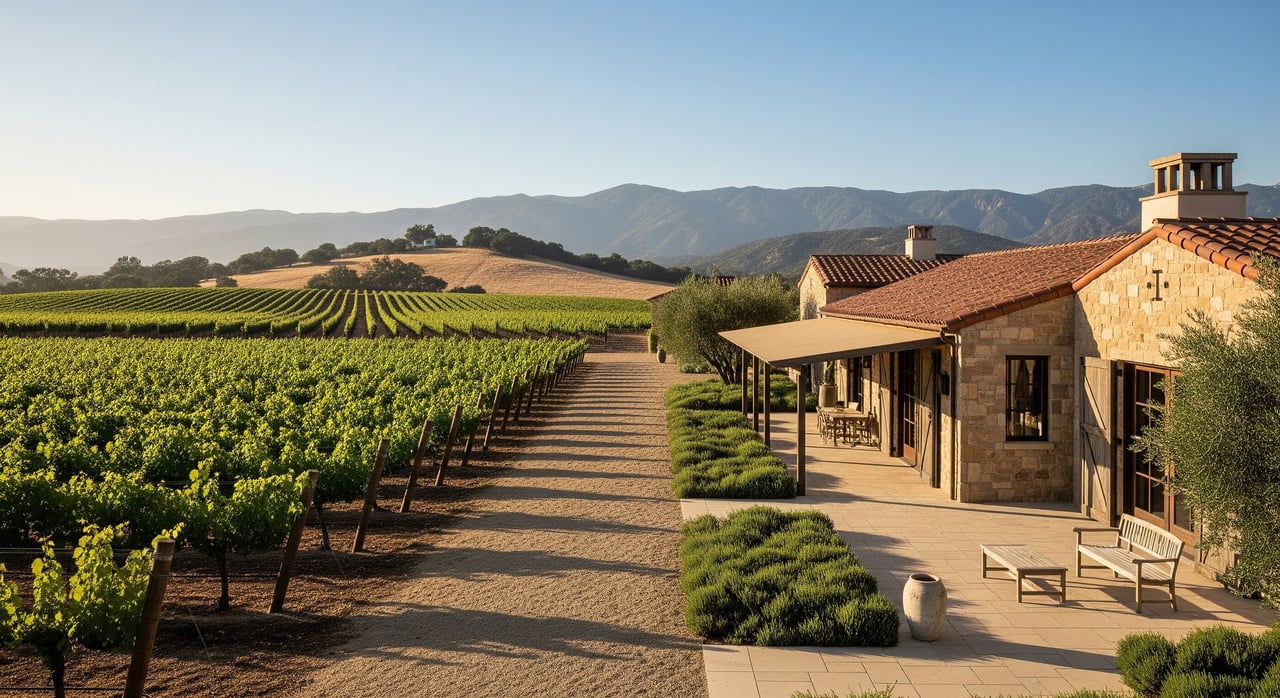
Dreaming about a vineyard estate in Los Olivos? You picture golden light on vine rows, mornings on the porch, and a slower, richer pace. You also want the facts on water, fire risk, staffing, and permits before you buy. This guide gives you a clear, practical look at the lifestyle and the due diligence that protects your investment. Let’s dive in.
Los Olivos at a glance
Los Olivos sits in the heart of the Santa Ynez Valley, surrounded by oak‑studded hills, vineyards, and low‑density ranch parcels. You get rural privacy with easy access to nearby towns and the coast. It is a small, unincorporated community known for tasting rooms, scenic drives, and a relaxed wine‑country rhythm.
The climate is Mediterranean with warm, dry summers and cooler, wetter winters. Marine influence creates microclimates, so certain pockets favor cool‑climate grapes like Pinot Noir and Chardonnay, while others suit Rhône varieties such as Syrah, Grenache, and Mourvèdre. This diversity is a key reason the valley is an established wine region.
Daily vineyard rhythm
Season by season
Vineyard life follows a clear cycle. You handle pruning in late winter, canopy work and shoot thinning in spring, and pest and disease monitoring through summer. Harvest runs from late summer into fall, when crews, equipment, and logistics matter most. Even a small vineyard needs ongoing attention, from trellis repairs to frost protection in cooler sites.
Staffing choices
You can hire a vineyard manager, contract local vineyard services, or build a blended team. Larger estates often keep year‑round staff and expand with seasonal crews at harvest. Many boutique vineyards favor more handwork, while bigger blocks may use mechanization for efficiency.
Equipment and tasks
Most estates rely on tractors, sprayers, and hand tools. Drip irrigation is common. Expect routine tasks such as leafing, replacing vines, and maintaining roads, fencing, and landscape buffers that support privacy and curb appeal.
Water, fire, and access
Water and irrigation
Water is foundational. Properties typically use private wells, surface allocations, or purchased water. You should verify well yield and water quality during due diligence and assess the condition of the drip system and irrigation infrastructure. Drought cycles and evolving groundwater rules can influence operating costs and planting decisions.
Wildfire readiness
Wildfire is an ongoing consideration for rural estates. You will want defensible space, fire‑hardened structures, and reliable access for emergency vehicles. Insurance availability and premiums can vary with mapped hazard zones, so it is smart to evaluate coverage options early.
Utilities and connectivity
Rural estates often use private wells and septic systems, propane for heating and cooking, and electrical service that can be weather‑dependent. High‑speed wired internet is not universal in all pockets. Where wired service is limited, satellite or fixed wireless can keep you connected for remote work.
Roads and maintenance
Driveways may be unpaved and gated. Some properties are served by private easements or HOA roads, each with different maintenance responsibilities. Clarify who maintains what before closing.
Equestrian and ranch options
Facilities and rules
Many estates pair vineyards with equestrian facilities or small‑scale ranching. Local zoning and building codes regulate barns, setbacks, manure management, and allowed animal units per parcel. If horses or livestock are part of your plan, verify requirements and capacity early.
Wine business choices
Hobby vs commercial permits
A hobby vineyard can be straightforward, but operating a commercial winery or tasting room on site adds layers of review. County and state rules can include conditional use permits, parking and traffic studies, and safety requirements. If you want on‑site production or public tasting, plan a permitting path at the start.
Taxes and enrollment programs
Some properties may qualify for agricultural tax status or historic conservation programs. These can reduce property taxes, but they usually come with contract obligations and use limitations. Not every parcel is enrolled, so confirm status and implications with your advisors.
Nearby amenities and travel
Towns and services
Los Olivos is centrally located with quick access to Solvang, Santa Ynez, and Buellton for dining, shops, and daily services. Broader medical care and specialty services are available in Santa Barbara and Santa Maria.
Culture and outdoors
You will find a dense network of wineries, tasting rooms, and wine events across the valley. Farm‑to‑table dining and local arts add to the lifestyle. Outdoor recreation ranges from riding and hiking to scenic cycling routes among the oak ridgelines.
Airports and drive times
Santa Barbara Municipal Airport offers convenient regional flights, and Santa Maria Public Airport is an option to the north. Depending on site and traffic, the coastal Santa Barbara area is typically under an hour by car, while Los Angeles and Orange County are multiple hours away.
Buyer due diligence checklist
Use this shortlist to focus your inspections and records requests:
- Water: well log, recent pump test, any surface allocations, and the condition of the drip system.
- Soils and site: soil borings, NRCS soil map review, and a viticultural assessment of aspect, slope, frost risk, and microclimate.
- Vineyard health: vine age, rootstock and clones, yield history, pest and disease records, and replanting outlook.
- Environmental: oak protections, biological surveys, riparian setbacks, and any steep slope or habitat constraints.
- Zoning and permits: current zoning, any conditional use permits, and restrictions on winery operations or events.
- Infrastructure: septic inspection and capacity, electrical service, road access and maintenance terms, and broadband and cell coverage tests.
- Fire safety: local hazard mapping, defensible space requirements, and documentation of mitigation work.
- Taxes and financials: property tax history, any agricultural or conservation contracts, and operating statements for producing vineyards.
- Insurance: homeowner and, if applicable, commercial coverage options and estimated premiums.
- Market context: comparable vineyard estate sales and current regional demand.
- Advisory team: secure a viticulturist, land use planner or attorney, CPA, and local contractors who know Santa Barbara County rules.
Budget and risk planning
Think in categories, not just purchase price. Annual costs can include labor, water and irrigation supplies, vineyard and landscape maintenance, property tax, and insurance. Wildfire exposure and location can influence insurance rates. If you plan to expand plantings or add on‑site wine production, factor in permitting timelines and potential infrastructure upgrades.
Work with Stormo Homes
Buying a vineyard estate is as much about land, water, and zoning as it is about views and architecture. You deserve a guide who knows parcel histories, microclimates, and where to find specialized help. Stormo Homes offers boutique representation with deep local knowledge, access to curated and private inventory, and hands‑on transaction management from first tour to closing.
If you are exploring Los Olivos or the wider Santa Ynez Valley, connect with a trusted local advisor. Start a confidential conversation with Nina Stormo to map your goals and build the right team.
FAQs
What makes Los Olivos good for vineyards?
- A Mediterranean climate with marine influence creates diverse microclimates that support both cool‑climate and Rhône varieties.
How big a concern is wildfire for estates?
- Wildfire is a key consideration; plan for defensible space, fire‑hardened structures, reliable access, and early insurance review.
Do I need permits to host tastings on site?
- Operating a public tasting room or winery can require county approvals and state rules, often including parking, traffic, and safety conditions.
How can I verify water for a property?
- Request well logs and a current pump test, review irrigation infrastructure, and confirm any surface water allocations during due diligence.
Are horses allowed on vineyard estates?
- Many properties allow equestrian uses, but local zoning and building codes set the rules for facilities, setbacks, and animal units.
Will I have reliable internet for remote work?
- High‑speed wired service is not universal; where limited, satellite or fixed wireless solutions are common alternatives.